

What is Bruxism or Teeth grinding?
Bruxism, or teeth grinding, is habitual, unconscious, involuntary, excessive grinding, gnashing, or clenching of teeth. It may occur during sleep or when a person is awake.
Types of Bruxism
1. Sleep or Nocturnal bruxism
If unconscious, involuntary, and excessive teeth grinding or clenching of teeth occurs during sleep, it’s called sleep or nocturnal bruxism.
2. Awakeful or Diurnal bruxism
If it occurs when a person is awake, then it’s called wakeful or diurnal bruxism. It may be due to stress, anger, or anxiety.
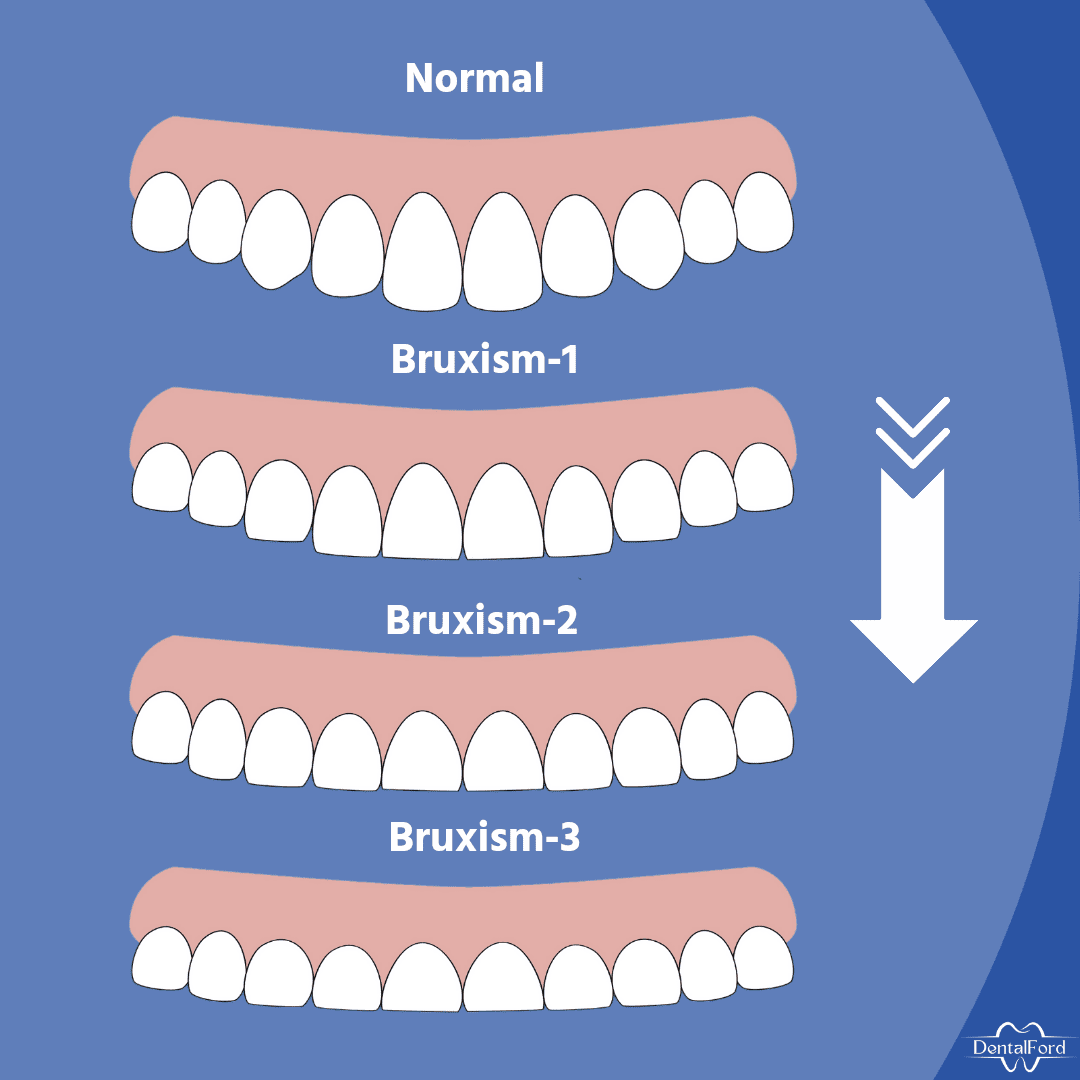
Signs and Symptoms
- Dull Headache
- Facial pain
- Teeth sensitivity
- Flattened teeth tips (attrition)
- Fractured teeth or fillings
- Linea alba along the biting plane
- Soreness of Jaw or Jaw pain (TMJ disorder)
- Painful and loosening of teeth
- Damage to the cheek/cheek biting
- Locking of the jaw
What are the Causes of Bruxism?
Psychological: Stress, anxiety, fear, and emotional tension may lead to grinding teeth or clenching of teeth. It is the most common.
According to Polysomnographic studies, bruxism is part of the sleep arousal response, which is a sudden change in the depth of sleep.
People with aggressive, competitive, or hyperactive personalities may also develop grinding teeth.
Occupational: Certain types of occupations may be responsible. Athletes who engage in physical activities may develop Clenching of teeth.
Local factors: In cases of more missing teeth, teeth clenching may develop as a person tries to maintain maximum contact with teeth. Occlusal disturbances or an abnormal bite are also the cause of the grinding of teeth. Consult a dentist to know the actual cause.
Systemic factors: Gastrointestinal and endocrine disturbances, allergy, and nutritional deficiency.
Sleep disorder: Sleep disorders such as sleep apnea is also considered causes of grinding teeth.
Other causes: According to a study in the Journal of the American Dental Association, people who consume alcohol and tobacco and are smokers are more likely to develop clenching teeth.
- Drinking alcohol increases the risk by 2 times, 1.5 times for those who consume 8 or more cups of coffee a day, and more than 2 times for those who are smokers and chew tobacco.
- Certain medications may also be responsible factors.
- Chewing a pencil, pen, toothpick, etc., leads to the clenching of teeth.
You should consult the dentist before reaching any conclusion about the cause.
Teeth grinding in children in Sleep
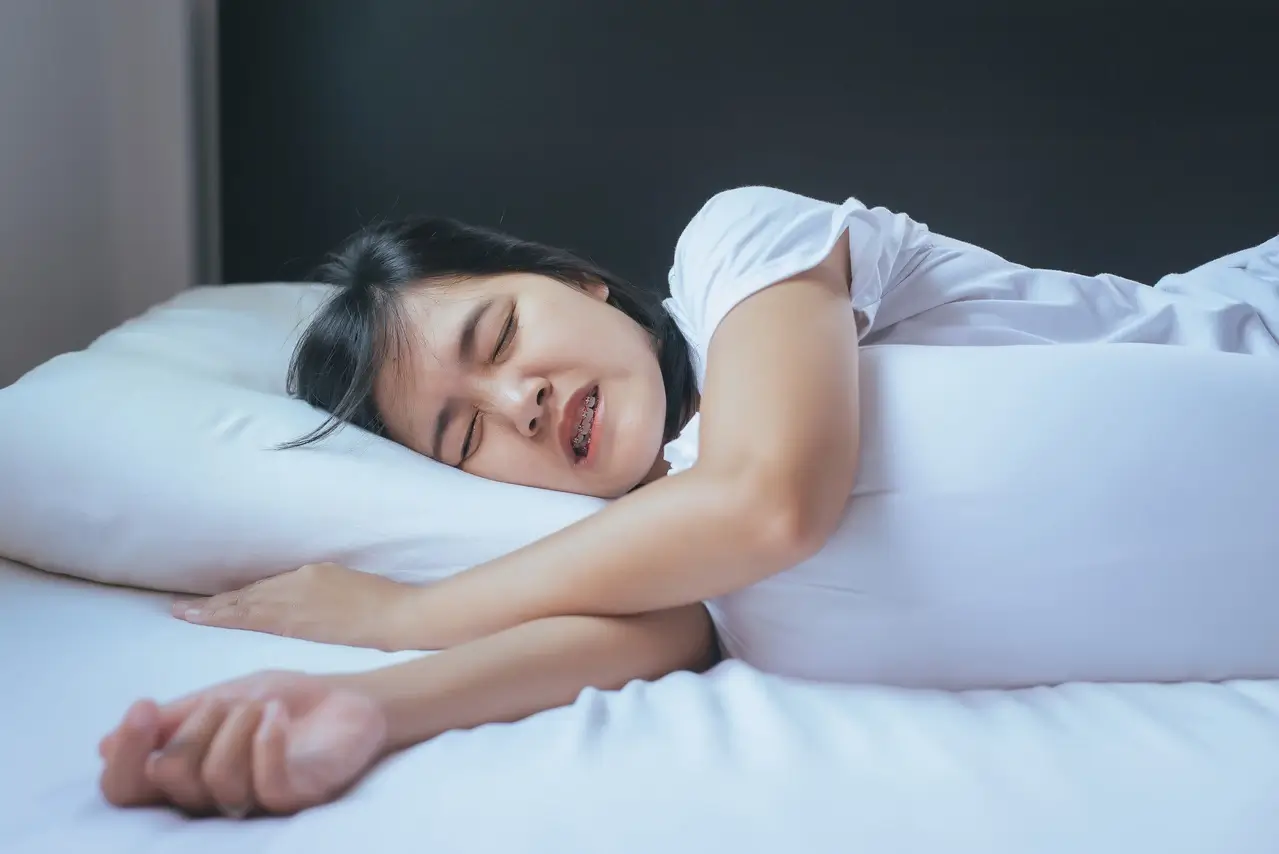
Teeth grinding in children, reported studies show the prevalence in children ranges from 7% to 15.1%,3–5, with girls apparently more frequently affected than boys.
- Teeth grinding in children during sleep is associated with generalized anxiety disorder and social anxiety disorder. It is also noticed that there is a strong correlation between neuroticism and teeth grinding in children.
- Studies also show that children with better socioeconomic status show a higher occurrence compared to those with poor socioeconomic status.
- Bruxism in children is also associated with snoring and having nightmares, which shows a higher chance of developing teeth grinding in children during sleep.
- Sleep disturbances have shown a strong association with teeth grinding in children while sleeping.
How to stop a child from grinding their teeth while sleeping
Sleep hygiene procedures could be helpful to stop a child from grinding teeth while sleeping. It includes,
A regular sleep schedule of going to bed and waking up, avoiding caffeine products, keeping your room dark and quiet for sleeping, stopping the use of screen devices at least an hour before sleep, and avoiding eating large meals at night.
All these things promote quality of sleep, reduce stress, and help avoid teeth grinding during sleep in children.
Complications if Not Treated on Time
- Damage to Teeth, such as cracked teeth or fractured teeth
- Pain in the temporomandibular joint (TMJ) or TMJ disorder
- Damage to the cheek/cheek biting
- Facial pain
Treatment of Bruxism
Psychological approach
Finding and solving psychological issues like stress and anxiety, emotional tension, and fear. Counseling or psychotherapy can help to cure the deep psychological issues of patients.
Mouth guard, Night guard, or Bite guard

Night guards, occlusal splints, bite plates, removable orthodontic appliances, etc., are useful to protect teeth and periodontal tissue. Ask your dentist about it.
Medications
Medications like muscle relaxants can help reduce teeth grinding. If you are taking antidepressants or stress-relieving medicines, tell the dentist about it.